








Start with the task you repeat most often. A useful workflow should make the day feel lighter from its very first run.
Ecommerce workflow automation
Flow
Put repetitive store work on autopilot
Create simple rules for orders, stock, customers, and follow-ups, then let Mercanest handle the routine while you get back to the business.
Or start with
Repetitive tasks
The small jobs that keep a store running can quietly take over the day. Turn the routines you repeat into simple rules, then let Mercanest keep the next step moving while you focus on customers and growth.
Stop repeating the same store work
Checking stock, sorting orders, tagging customers, and sending follow-ups all matter. They should not require the same manual clicks every day.
1
event starts
the workflow
1+
rules decide
what happens next
24/7
routines keep moving
when you are busy
NounAutomation/flow/
Flow: a simple rule for what happens next
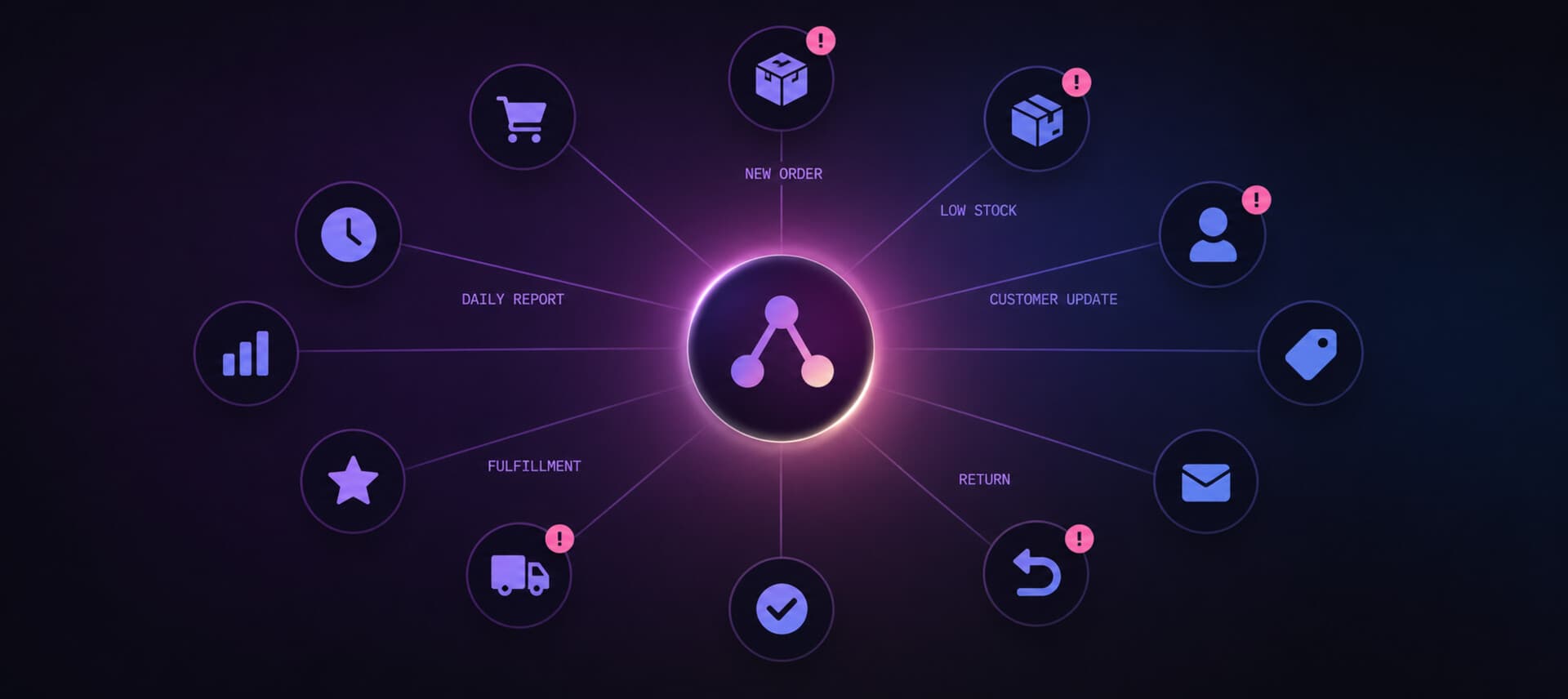
A workflow connects a store event to a useful result. Choose what starts it, decide which rules matter, and let Mercanest complete the next step consistently.
Trigger:EventFlow
The store moment that starts the routine.
Condition:FlowRule
The checks that decide whether work should continue.
Action:RuleResult
The task Mercanest completes when the rule matches.
How it works
Choose the moment. Set the rule. Let the work move.
Every flow follows three clear steps, so you can automate a useful routine without turning your business into a technical project.
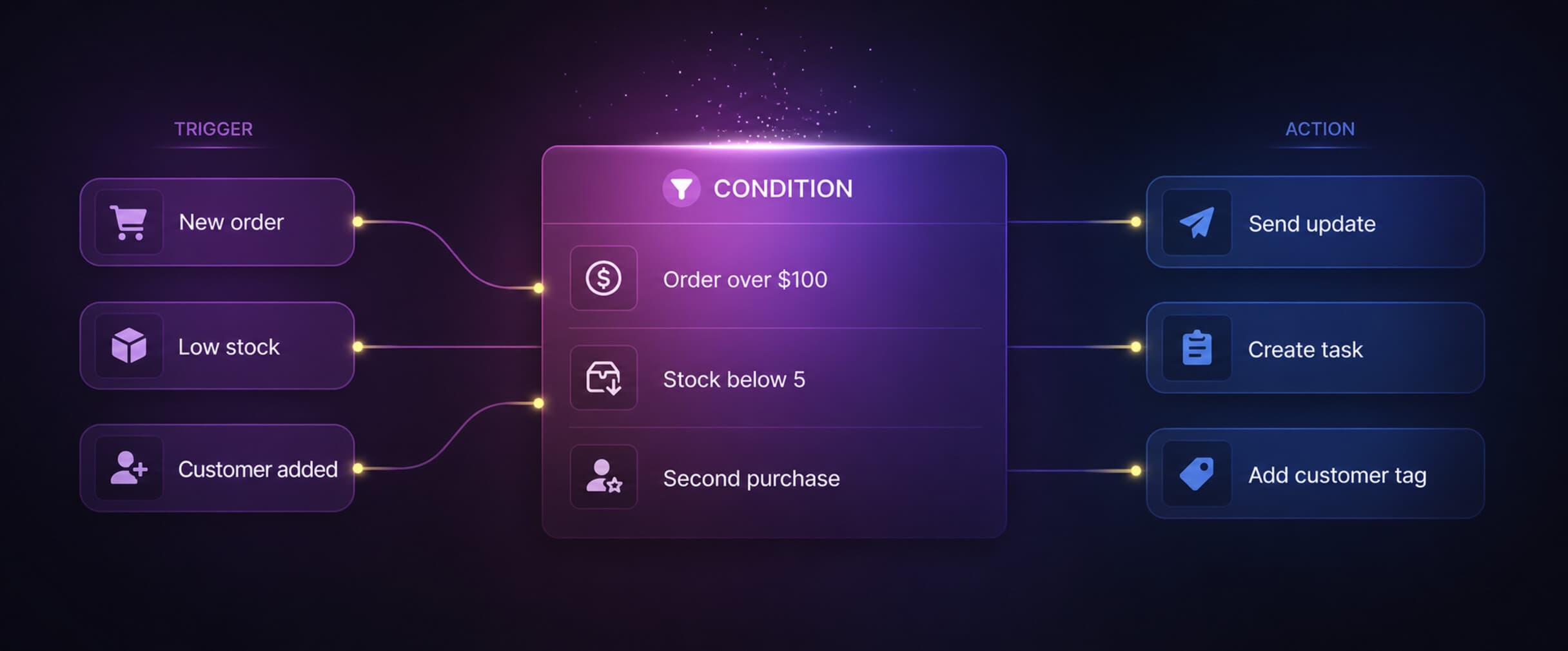
Trigger: the store event to watch for.
A new order arrives, stock runs low, or a customer reaches an important moment.
Condition: the rule that keeps it relevant.
Check the order value, stock count, customer history, or another detail you care about.
Action: the useful next step.
Send an update, create a task, organize the order, or add a customer tag.
Start with a routine you already know by heart.
Turn one repeated task into a clear flow, then add more as your store grows.
Mercanest handles the repeatable steps.
You keep the business decisions.
Automate the routine without giving up control over how your store works.
Flow handles:
- Watching for store events
- Checking your conditions
- Completing the next action
- Running recurring routines
- Keeping each run organized
- Connecting routine store work
You decide:
- Which events matter
- The rules to apply
- What the result should be
- When they should run
- When to review or pause
- How your business operates
Built for the routines behind a growing store
Good automation does not replace the seller. It gives the seller more time for the work only they can do.
- 3
- clear building blocks
- 1
- connected store view
- 24/7
- routine coverage
- Your rules
- your control
Ready-made ideas for the work sellers repeat most.
Begin with practical flows for low stock, order review, customer follow-up, fulfillment, and recurring store checks. Adjust each one around your own routine.
A small store starts with hands-on work.Every order gets personal attention.
Growth adds repetition.The same checks return every day.
A trigger notices the moment.A condition protects your rule.
The action keeps work moving.You stay focused on the business.
Frequently asked questions

Put routine store work on a flow you can trust
Create simple rules that keep orders, stock, customers, and follow-ups moving.